
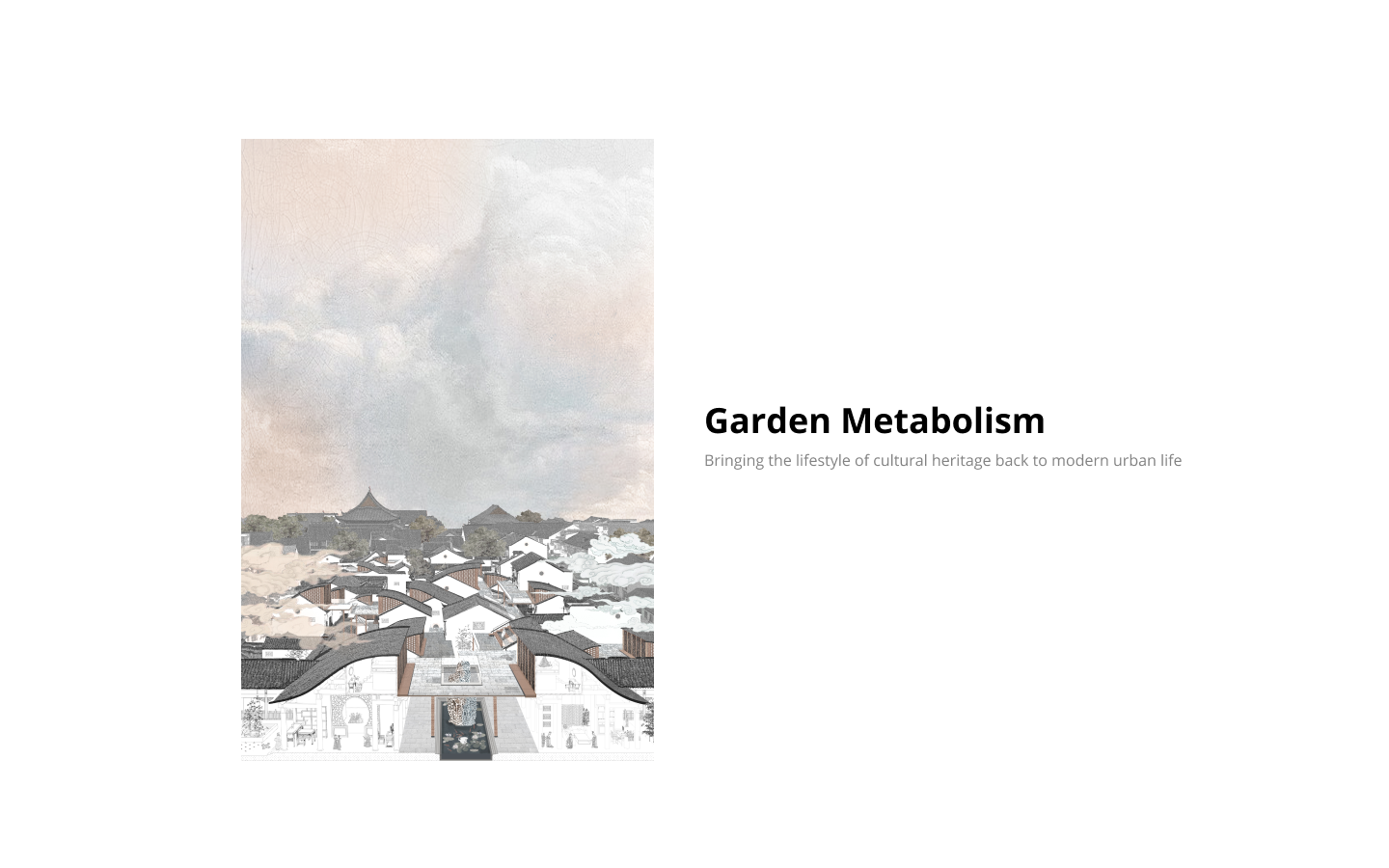
In the progress of Urbanization, Modern Suzhou City has sprung up, while the original city memory and culture are fading in the life of citizens.
Integrate the classical garden experience into the modern lifestyle, and build the community with the residents' cultural identity.
Reconstruct traditional houses, respect the original form and meet the needs of the modern co-living community.
Architecture designer & researcher
July. 2018 - Sept. 2018;
Feb. 2020 - Mar. 2020
Rong Guo, Yu Liu, Peili Hu
Adobe Creative Suite, Rhinoceroes, Skechup
During the research phase, I led a team to conduct ethnographic research on Suzhou's Classical Gardens and dwellings. I conducted field mapping, observation, interview, and architectural measurement.
During the ideation phase, my ideas were modified and developed into our final concepts. I led the space experience design in the dwelling reconstruction and was responsible for 3D model prototyping and architectural plans drawing. I then built and rendered detailed scenes and created architecture illustrations with Rong Guo for visualization.
Finally, our design won us the Third Prize of UIA-HYP CUP 2018 International Student Competition of Architectural Design. I further iterated our design and created long scroll illustrations with teammates for 2 exhibitions and published on Urban Environment Design (UED) Magazine.
We started this project for the Open Call of the UIA HYP Cup 2018 International Student Competition in Architectural Design.
Design task:
The task is to identify a central urban site in one of China’s 1st or 2nd tier cities and propose a co-living cluster with about 1000 small units. Various species of units need to be invented, varied, and perhaps hybridized. The varied patters of voids and inbetween spaces should make space for social communication. These shared spaces deliver the communicative tissue that motivates the residents to choose this development in the first place.
In this speculative design project, we decided to study the impact of urbanization on regional culture and lifestyle. After our primary and secondary research, we focused on the traditional Suzhou dwellings and Classical Garden culture and designed to intruduce a nostalgic lifestyle back to modern life and arouse citizens' regional cultural identity of Suzhou City.
To better understand Suzhou classical dwellings and Suzhou Classical Gardens' current situation, I led a team to conduct two-week site research on traditional gardens and dwellings in Suzhou. We conducted field mapping, observation, interview, and architectural measurement.
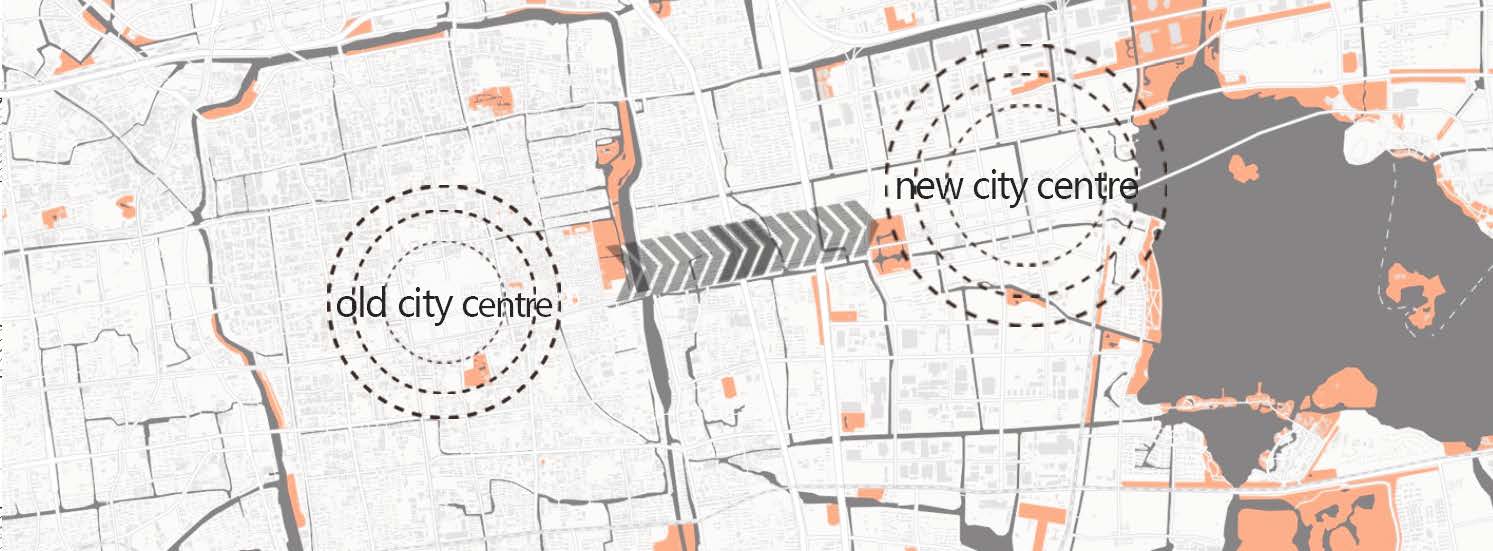
Transfer of the City Center
Given the whole city, the focus of urban construction is moving eastward. If the status quo is maintained, the old city center will gradually lose its competitiveness.
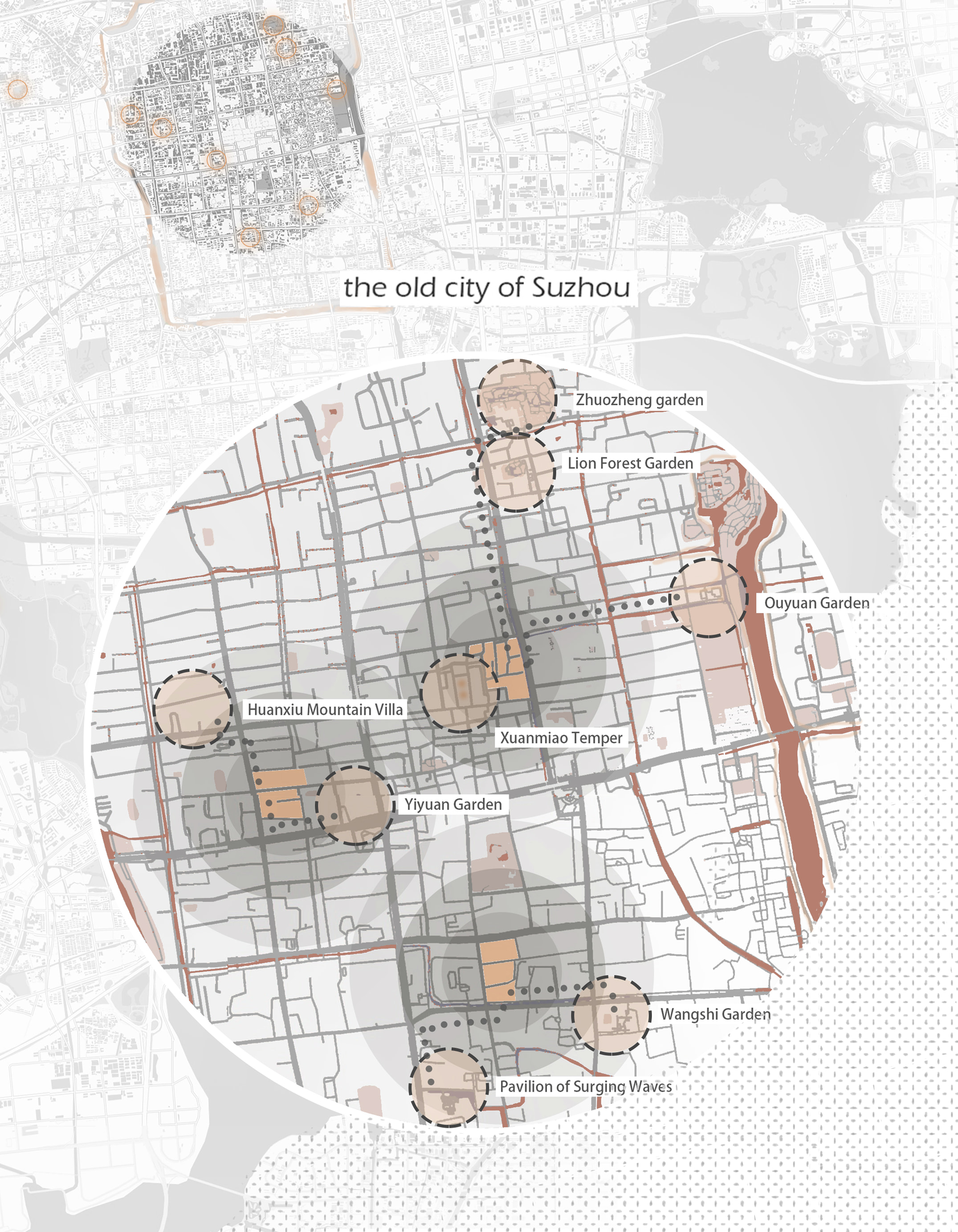
Selection of Site
It is forbidden to reform those gardens under state protection. To establish a new connection between old and new, we decided to focus on the old residential houses in Suzhou’s old downtown area. To a certain extent, transformation is allowed. There are several suitable residential areas in the picture, surrounded by ancient buildings and gardens.
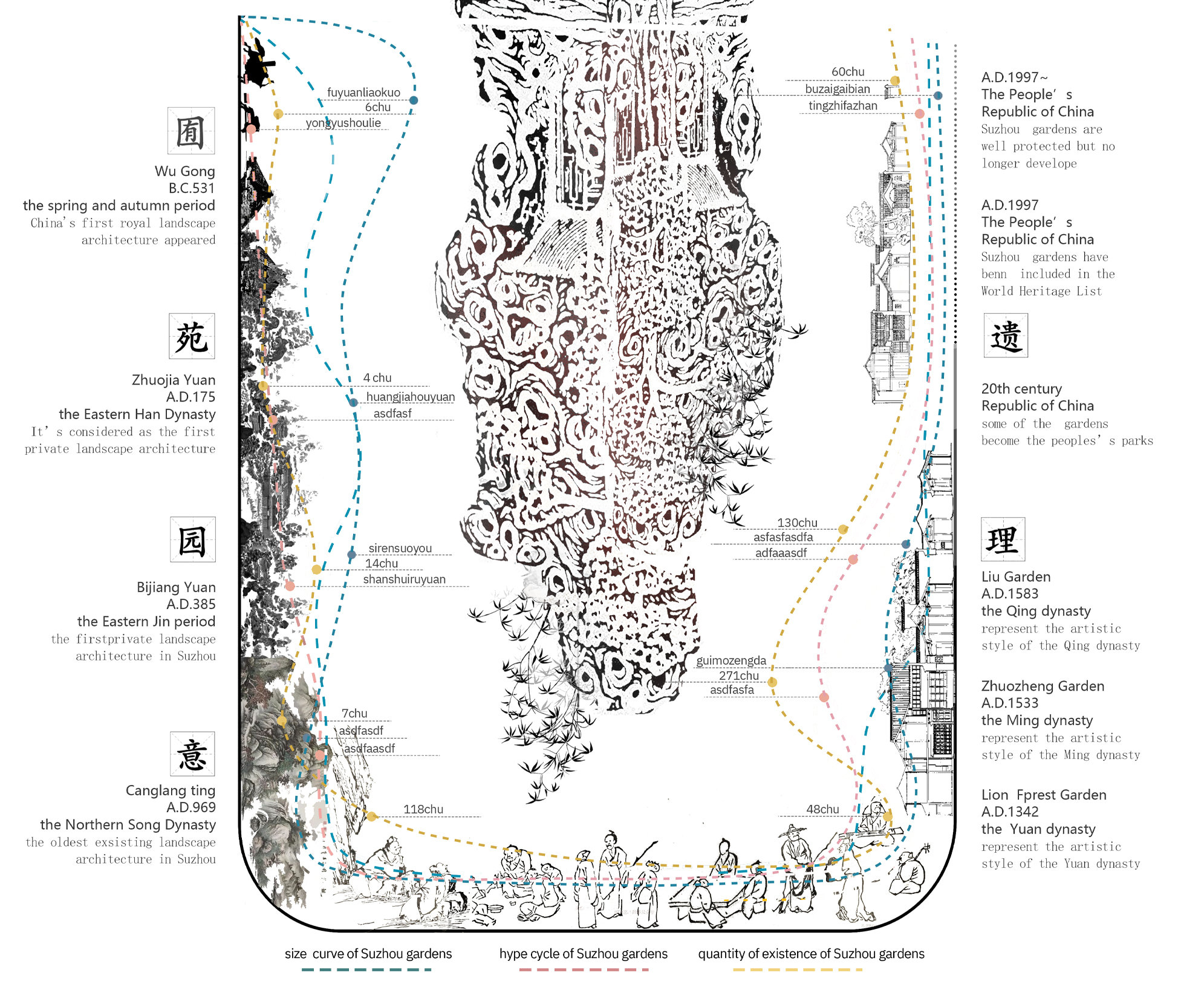
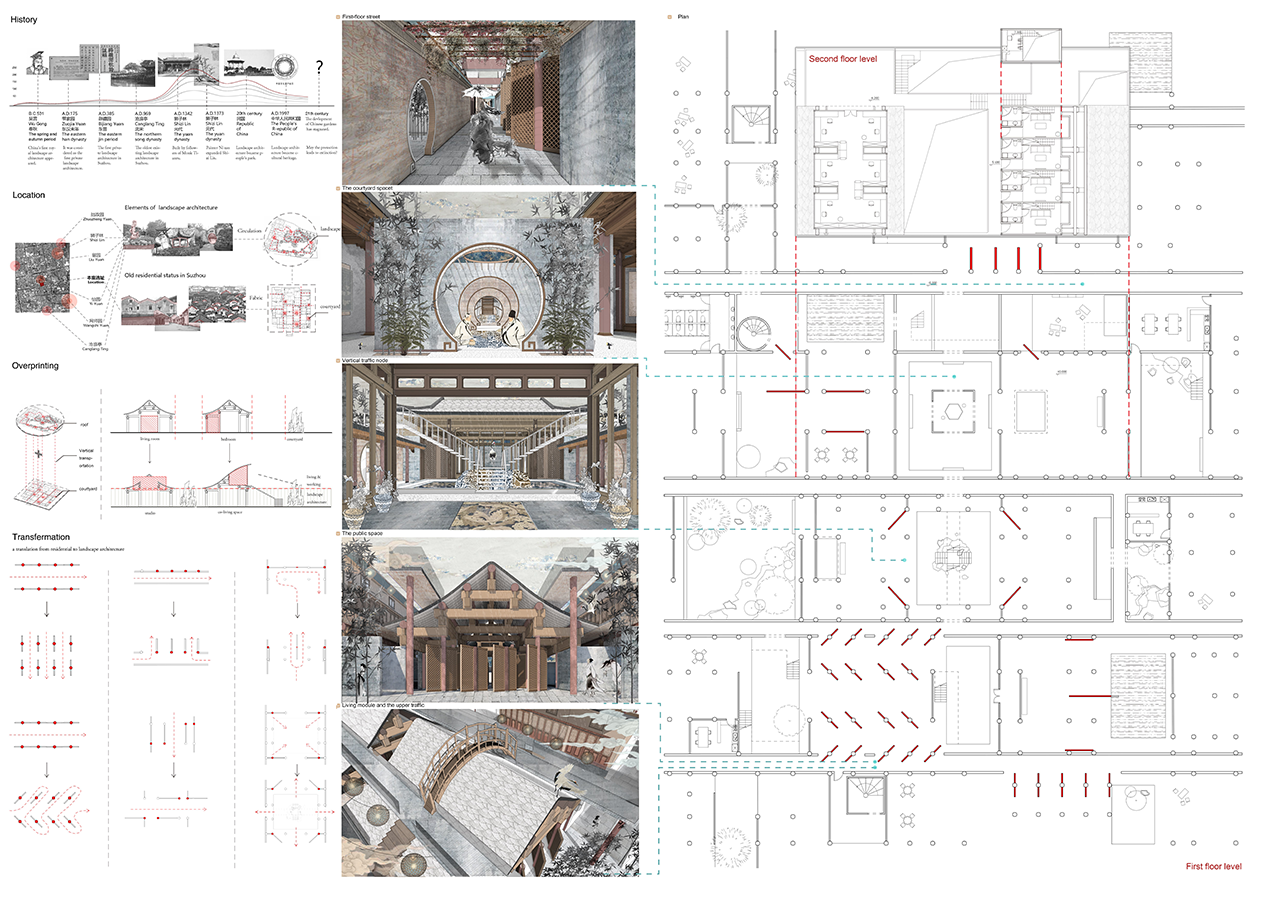
A History About 2500 Years
Suzhou Classical Garden is an art system of freehand landscape architecture formed by the organic combination of literature and garden art. It originated in the Spring and Autumn Period, developed in Jin, Tang, and Five Dynasties, flourished in Song Dynasty, and peaked in Ming and Qing Dynasties.
Cultural Heritage Under Protection
The government set up a unique plan for conservation and restoration and gradually opened the private gardens to the public. In 1997, Suzhou Gardens were included in the world cultural heritage. Despite the excellent protection, Suzhou Classical Garden has become a beautiful monument of Chinese culture and no more used in our modern architecture.

Immersive Experience Design in Classical Gardens
The whole garden forms a three-dimensional picture through which you can walk. Individual parts are only gradually entered or discovered as you go.
Under the guidance and implication of affordances with various sensors, people are encouraged to ramble and explore freely. Yet each scene in their journey is in exquisite composition and is presented in ingenious spatial sequences. The garden concept as a series of separate but interconnected parts, to be discovered and enjoyed, is analogous to the unrolling of a Chinese landscape painting.
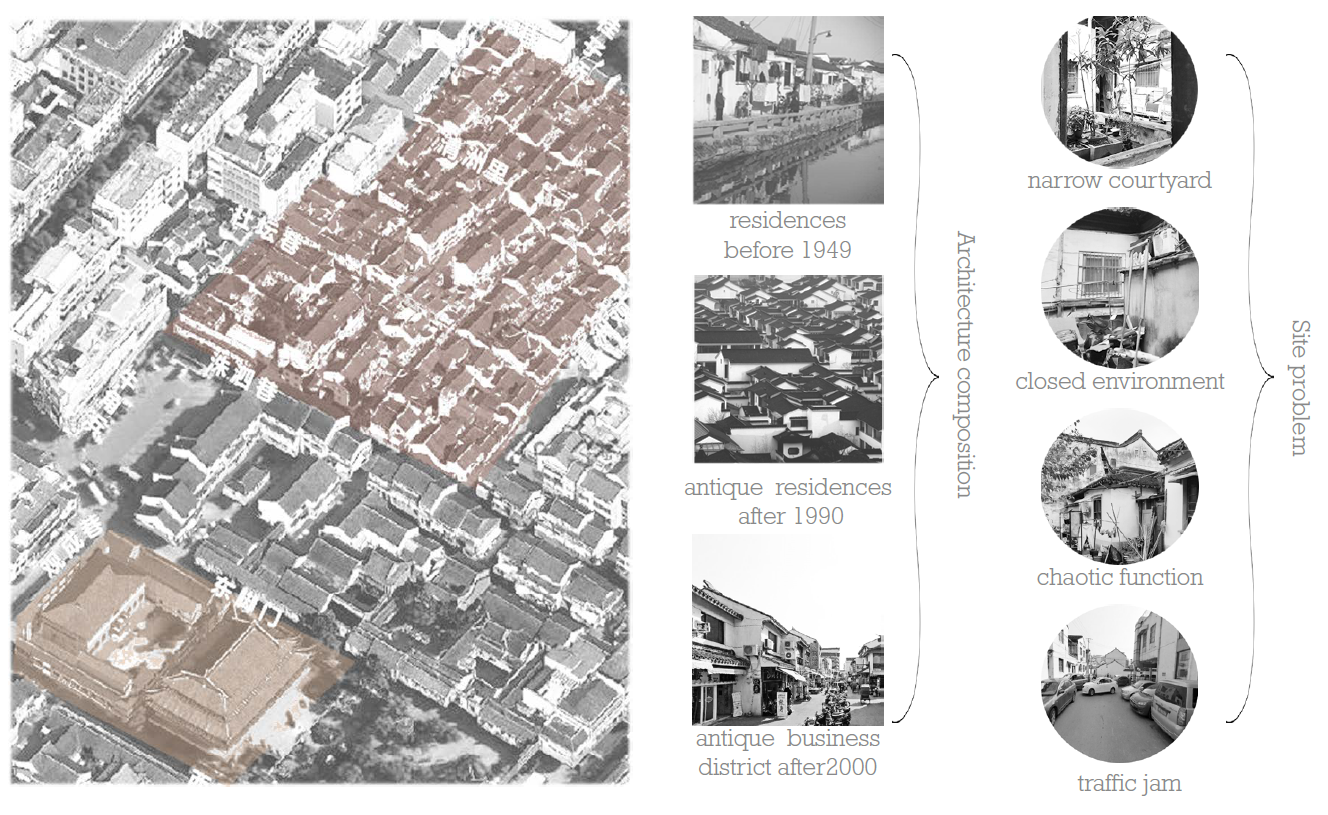
Poor Living Conditions of Traditional Dwellings
Suzhou residential compound comprises several or even dozens of courtyards; each courtyard is composed of a house and a patio. These courtyards are usually arranged following the axis.
These houses are too old and no longer adapted to modern citylife. They affect the regional vitality due to the poor living conditions. Also, some unordered reconstructions were over modernized, which destroyed the cultural features. Most residents left, but we are unwilling to demolish these old houses because of their cultural values and memories.
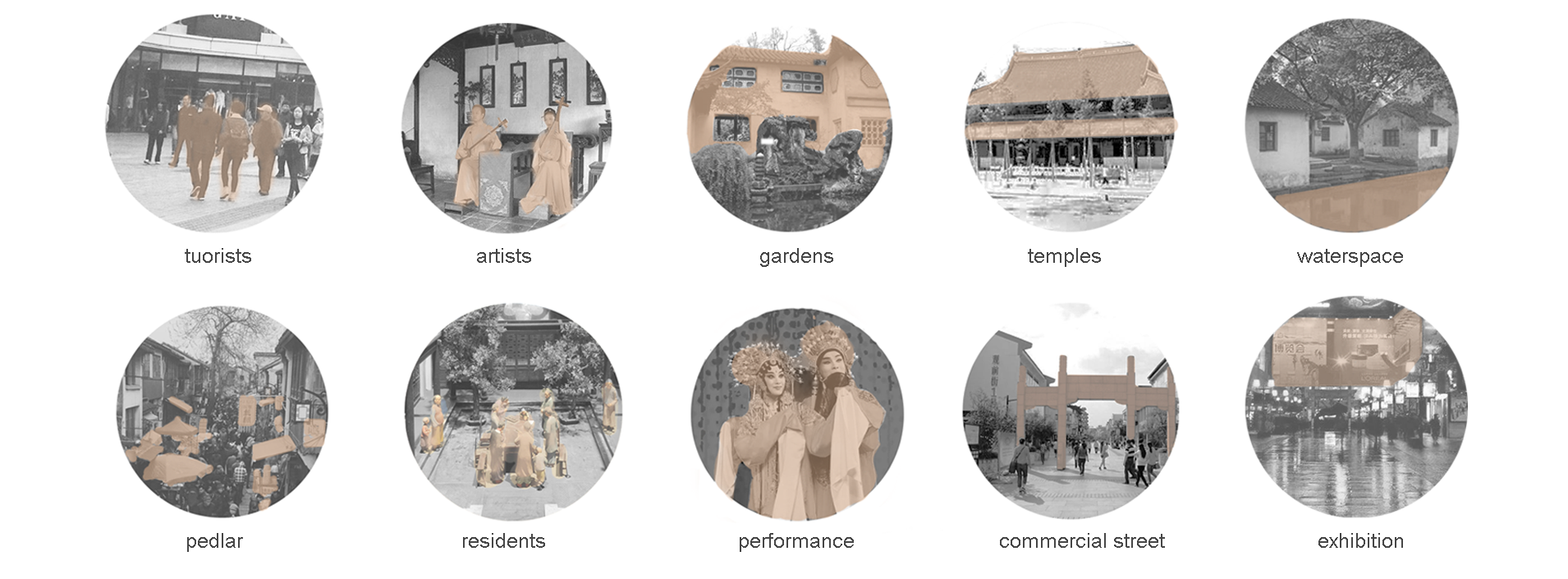
Cultural Attractions Representing City Identity
There are still a lot of activities in the old town. Some residents were reformed into commercial streets with exhibitions and performances. Tourists visit here as cultural attractions. Residents also come to the old ancestral halls and temples to worship their ancestors. They crossed half a city for their cultural identity.
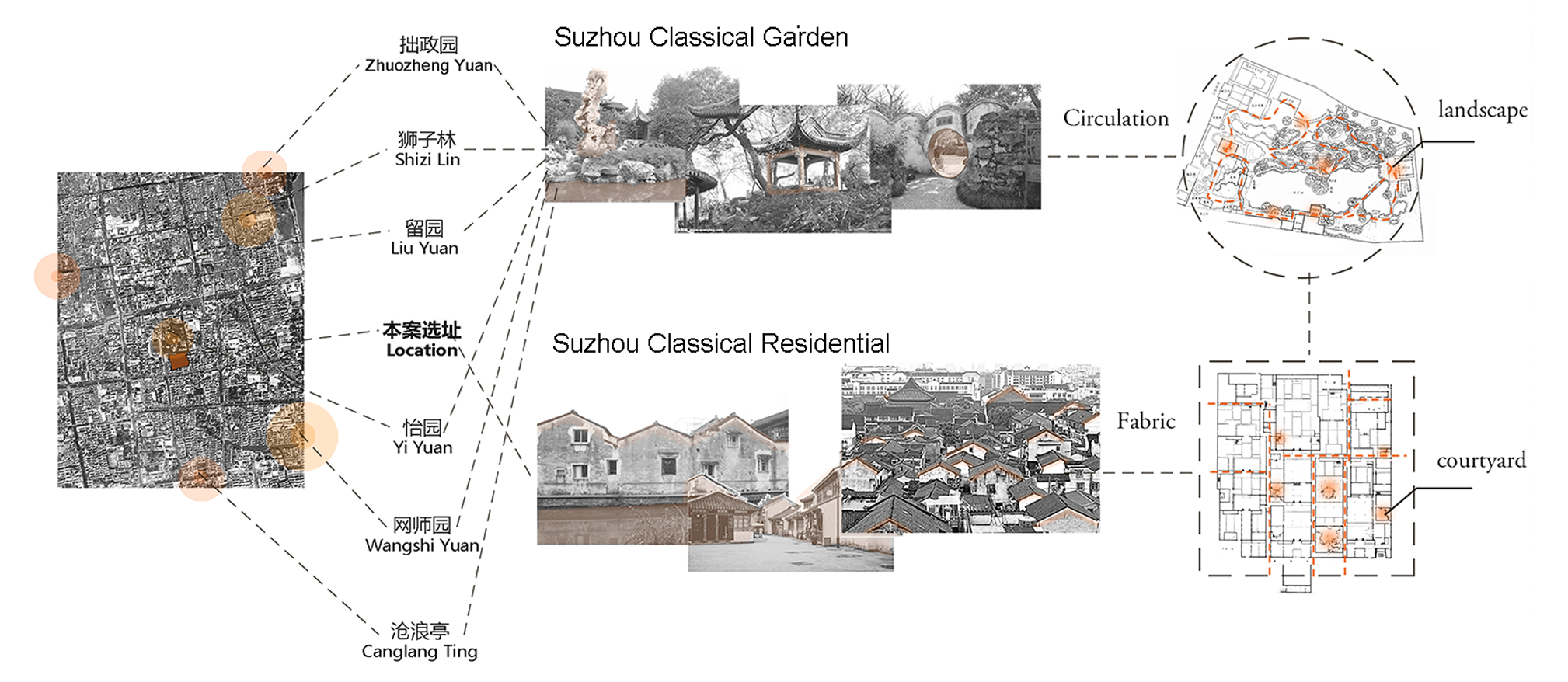
As a microcosm of the natural world in the city, the garden provided the calmness and right conditions for the scholar’s work. The essence of Classical Gardens arises from the house and garden being designed as one entity. The living and garden experience shared a similar concept, fabric, and design language. The acient Chinese combined them together as a civilized lifestyle to pursue their life philosophy.
The stronger the modern civilization is, the more separated the relationship among traditional culture, people and city is. As the new Suzhou was build by modern high-rises with concrets like thousands of other cities, the regional and cultural elements no longer exist. Gardens were protected, and dwellings were uninhabited. Though the locals could drive across the city back to visit for nostalgia, they were forced to lose their traditional lifestyle and cultural identity in their modern daily life.
Today, we have art galleries, poetry groups, literary institutes, botanical gardens, ecology parks, nature reserves, tea-houses, churches, and temples, all disparate and mostly separate. The acient Chinese accommodated all of these in his garden, together with a very powerful sense of harmony with the natural world.
We tried to re-establish the Chinese Classical Garden's fundamental concepts by creating a modern equivalent that would encourage harmony between various activities and with a strong ethos of respect for the regional culture.
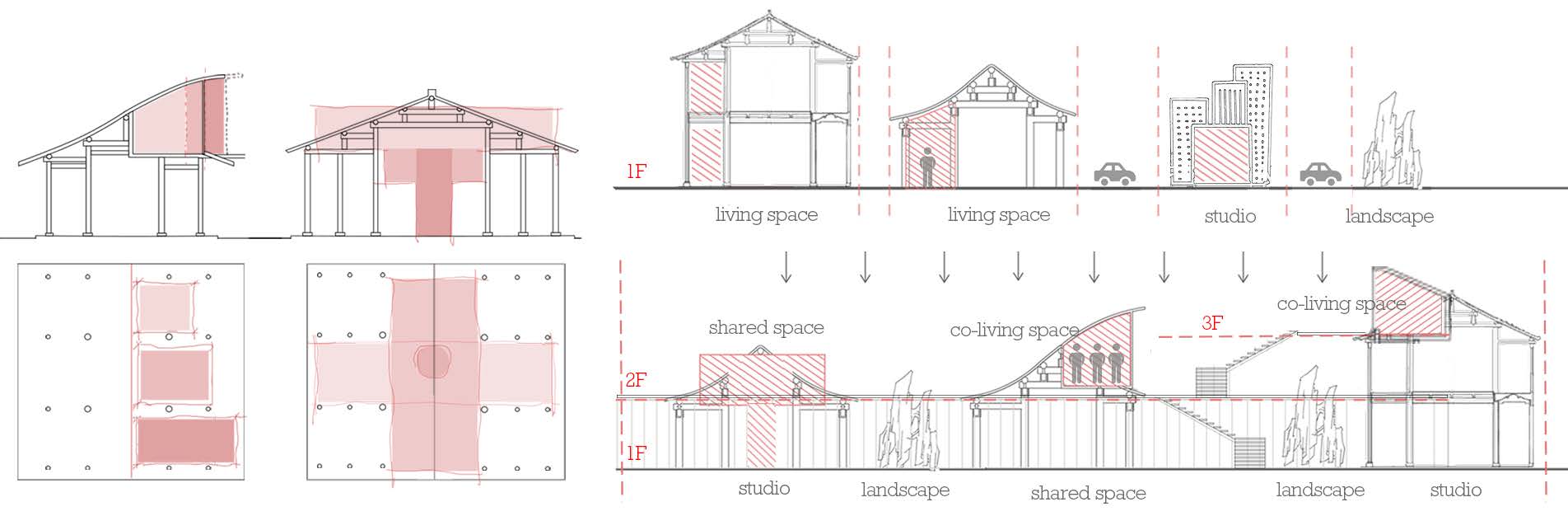
Weaving Garden Experience back into Modern Life
As acient Chinese design dwellings and gardens as a entity of their daily life, we decided to weave garden experience in our traditional dwellings reconstruction for co-living communities.
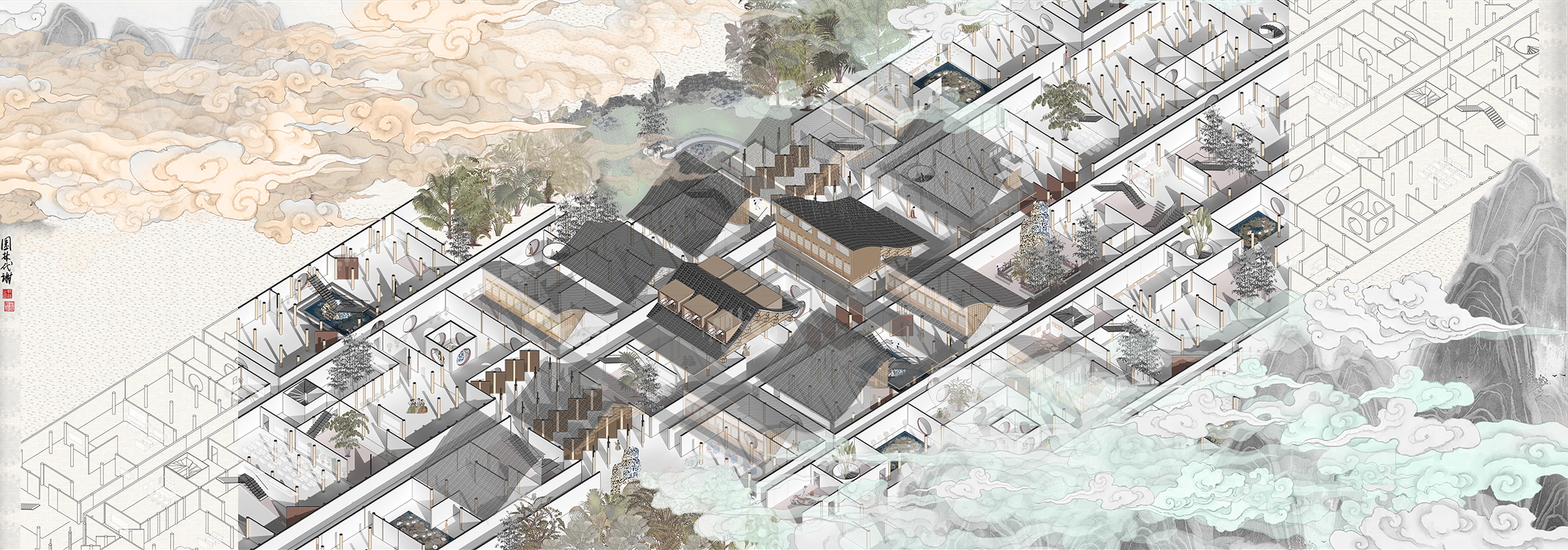
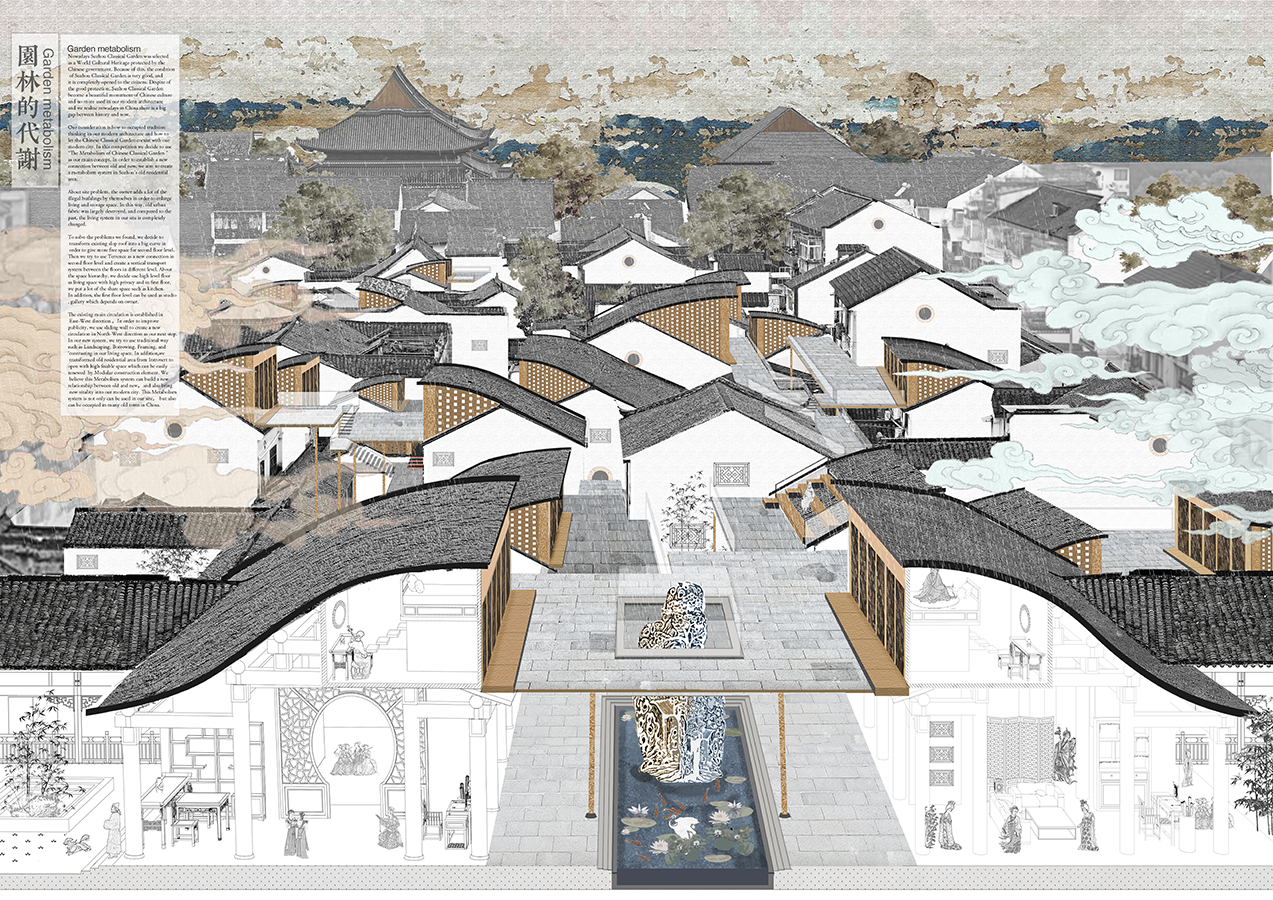
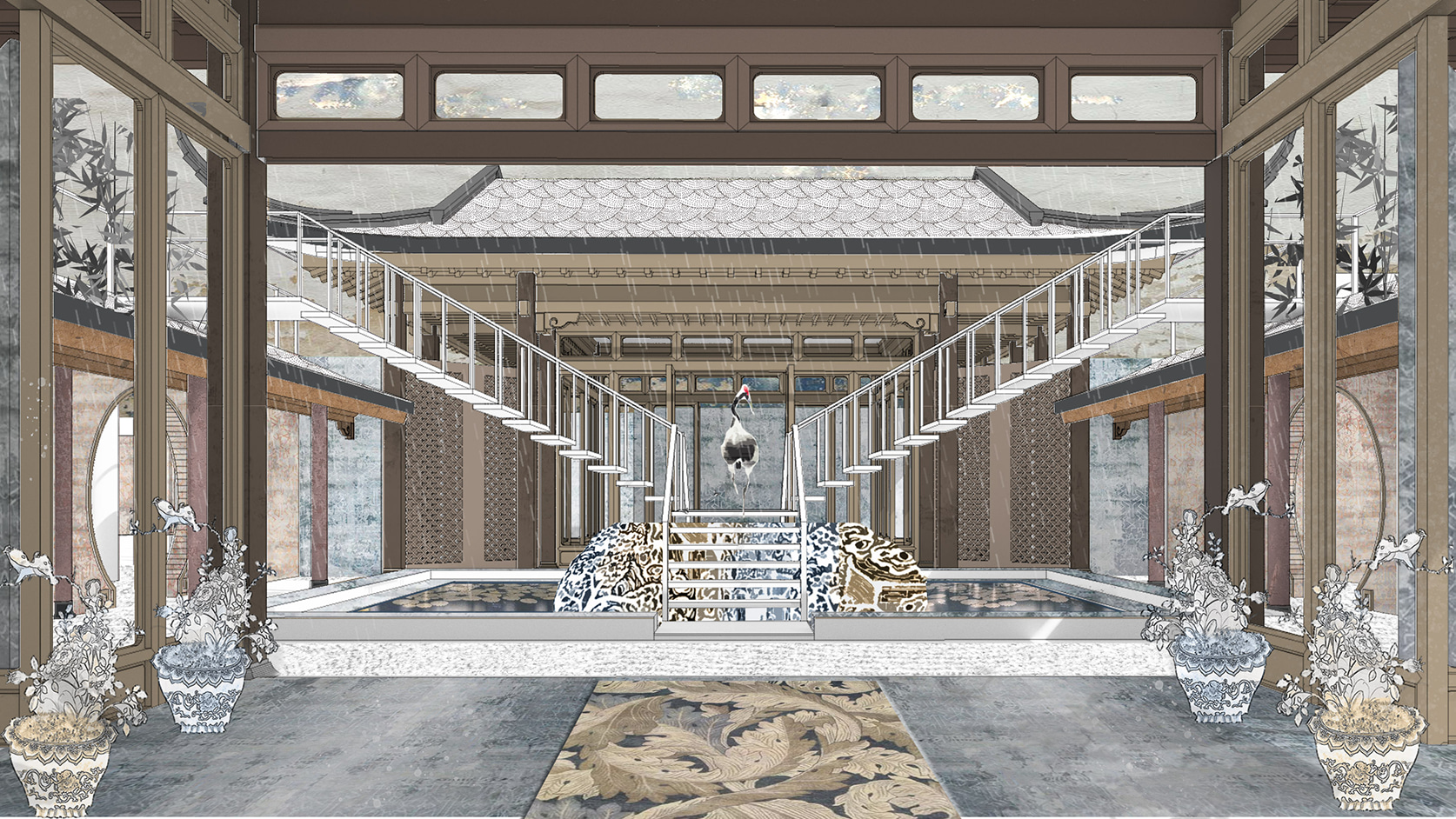
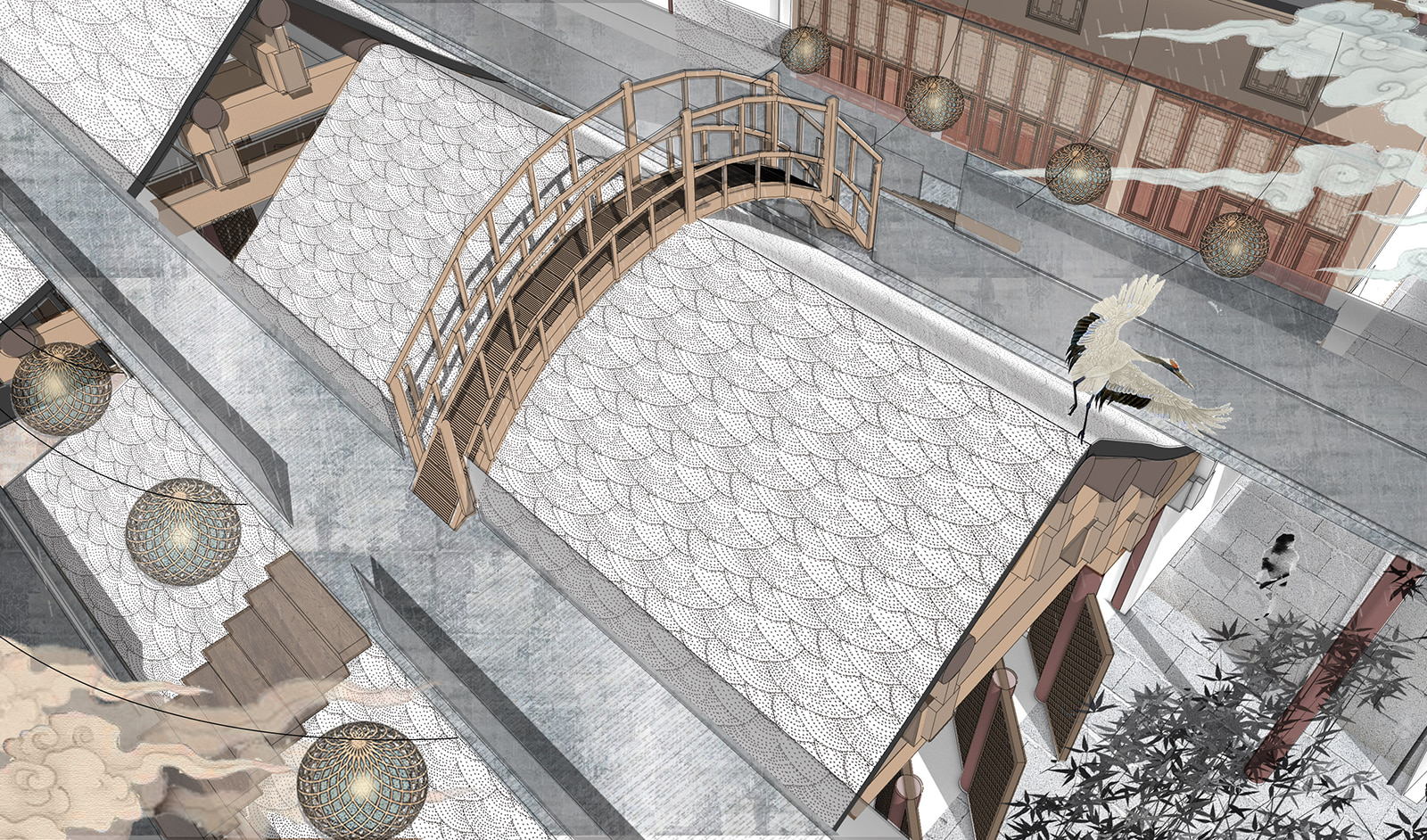
After multiple rounds of iterations, we came up with the idea that arranges them vertically. Since traditional dwellings no longer meet ourliving requirements. We moved the residential and working function to the roof for better living conditions, like more space, sunshine, and views. What'smore, we introduced Classical Garden design techniques to the ground floor and created a garden-like roaming experience for shared space like the living room and kitchen, and spontaneous public events in the community, such as communication, game, exhibition, and performance, etc.
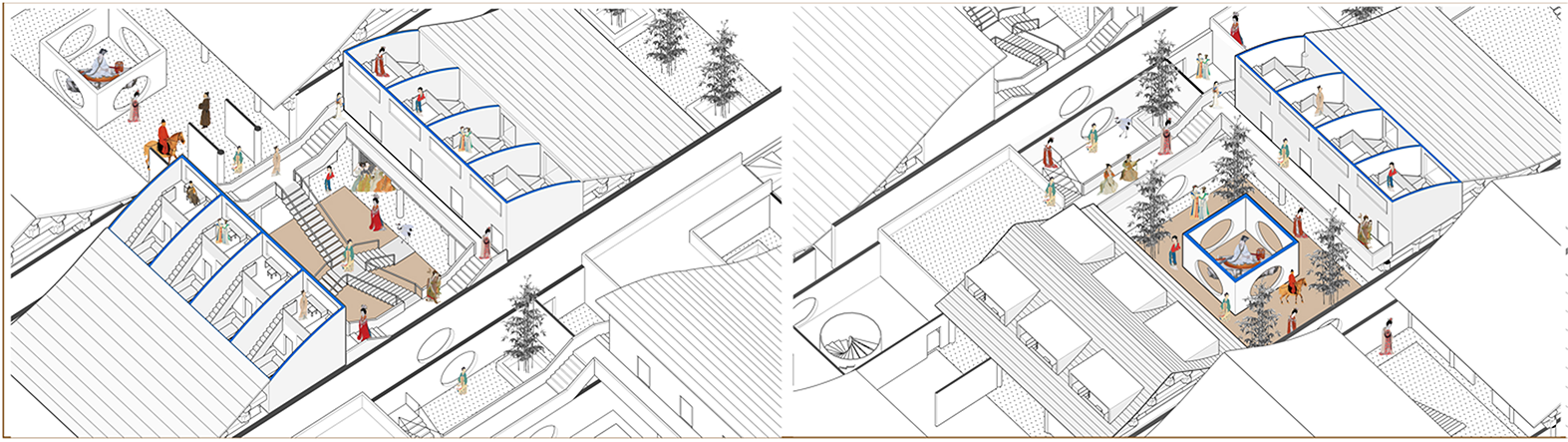
Garden Experience in the Community
We found the similarity between gardens and the ground floor. The ground floor, which was initially criticized as narrow and limited, became open and organic after freeing it from residential function. Space and narrow path under eaves became corridors linking the scenery; courtyards turned into attractive spots where public activities occur.
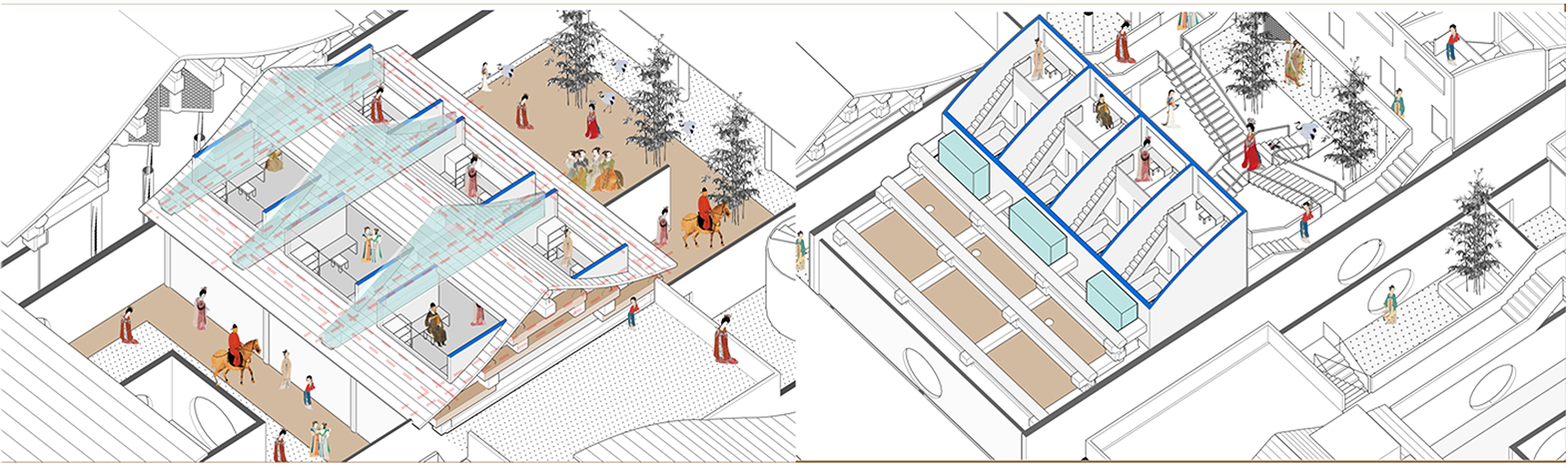
Residential Modules on the Roof
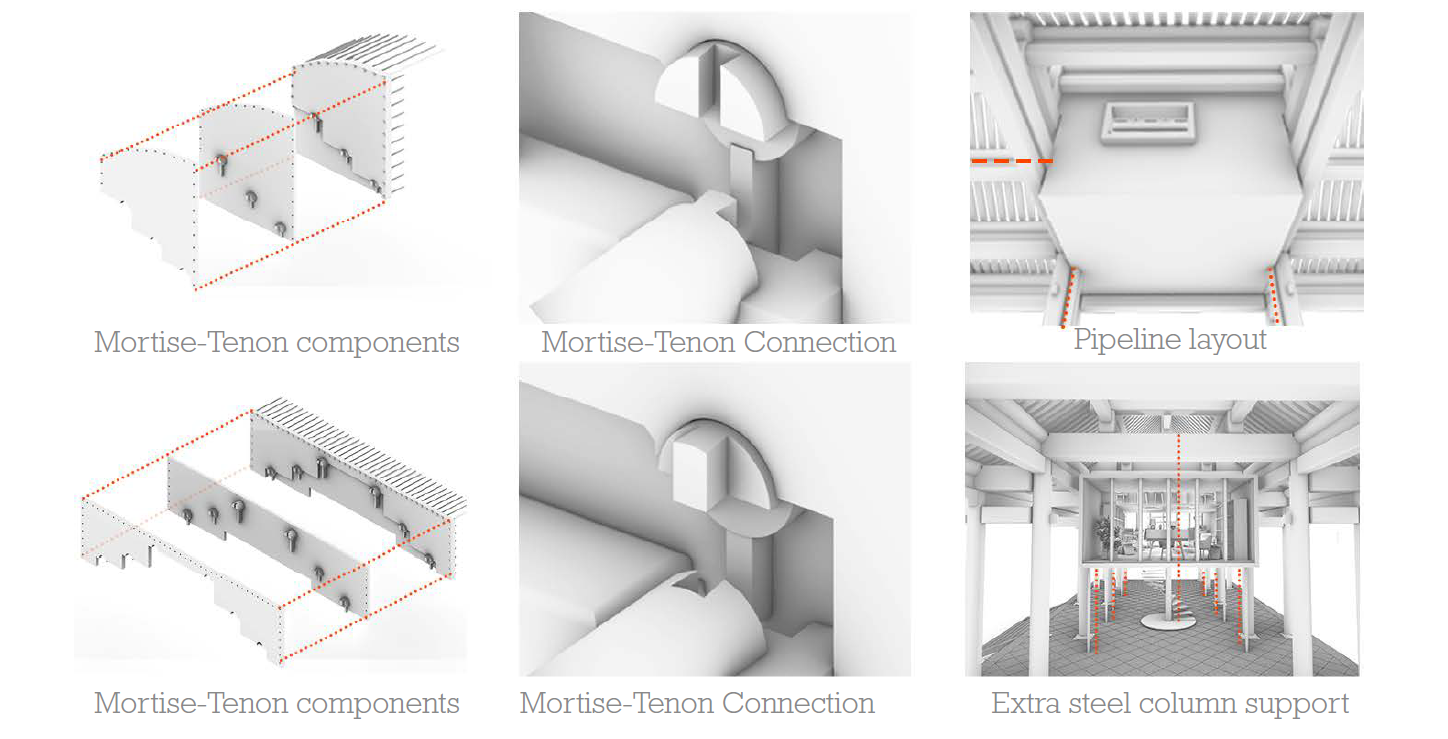
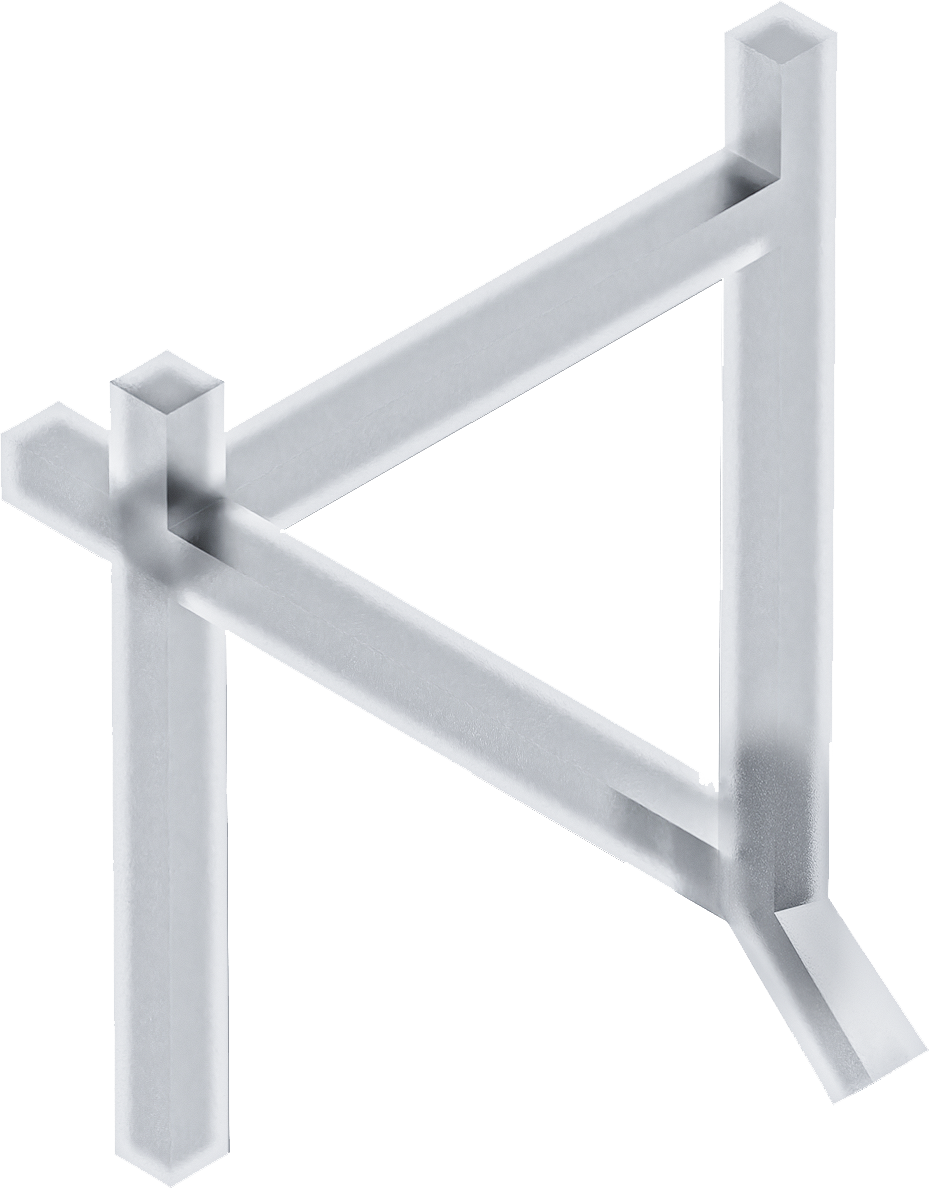
Post and lintel construction and the column and tie construction are used in Suzhou's residential buildings. The wooden construction follows the modulus rule, which makes them quite suitable for modular transformation. At the same time, the scale of the module suits the co-living lifestyle well. We designed the new modules for rest and work, applying them to houses that were already modular two thousand years ago and then applying them to the co-living community.
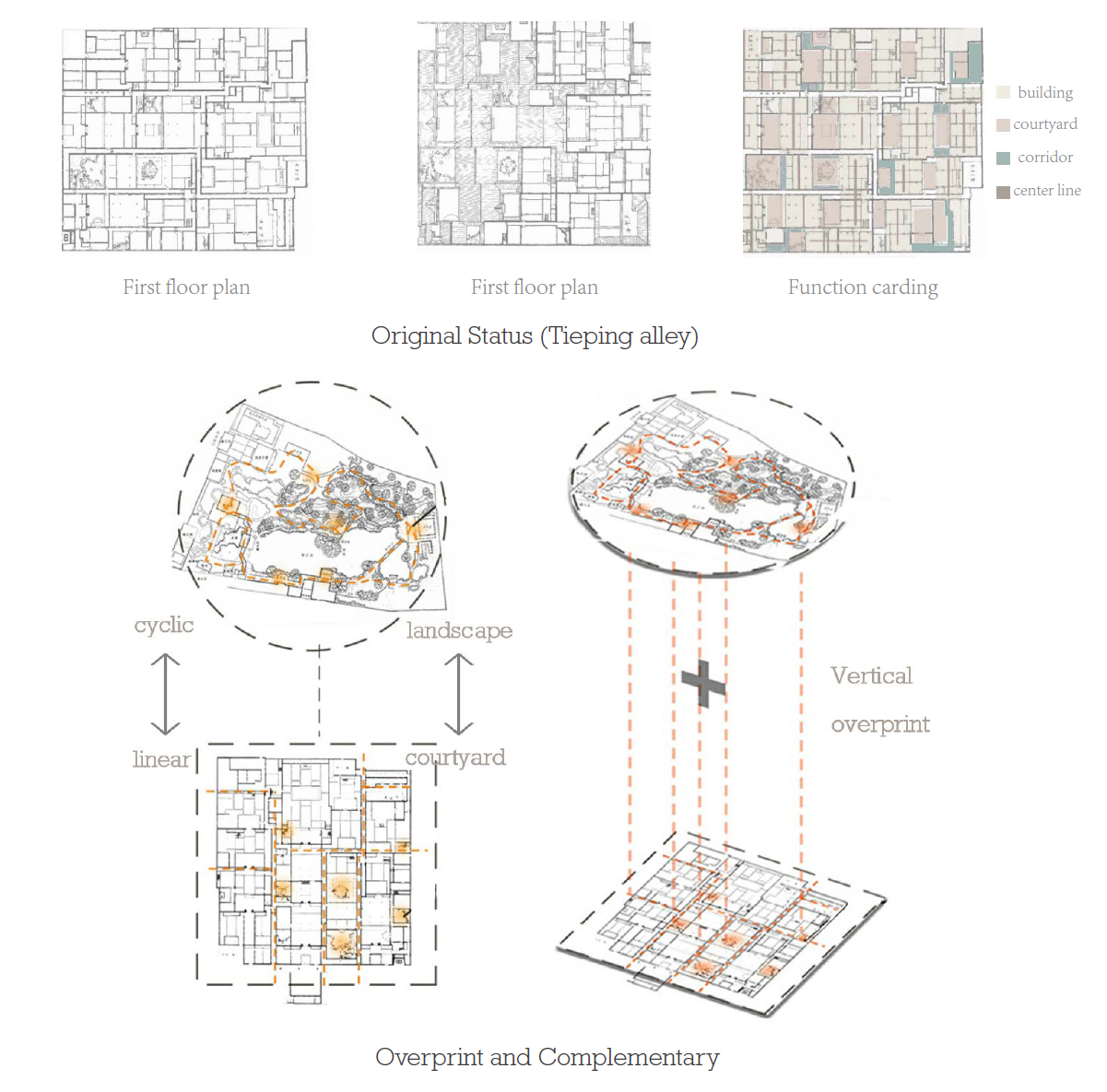
The Whole Community as a Garden
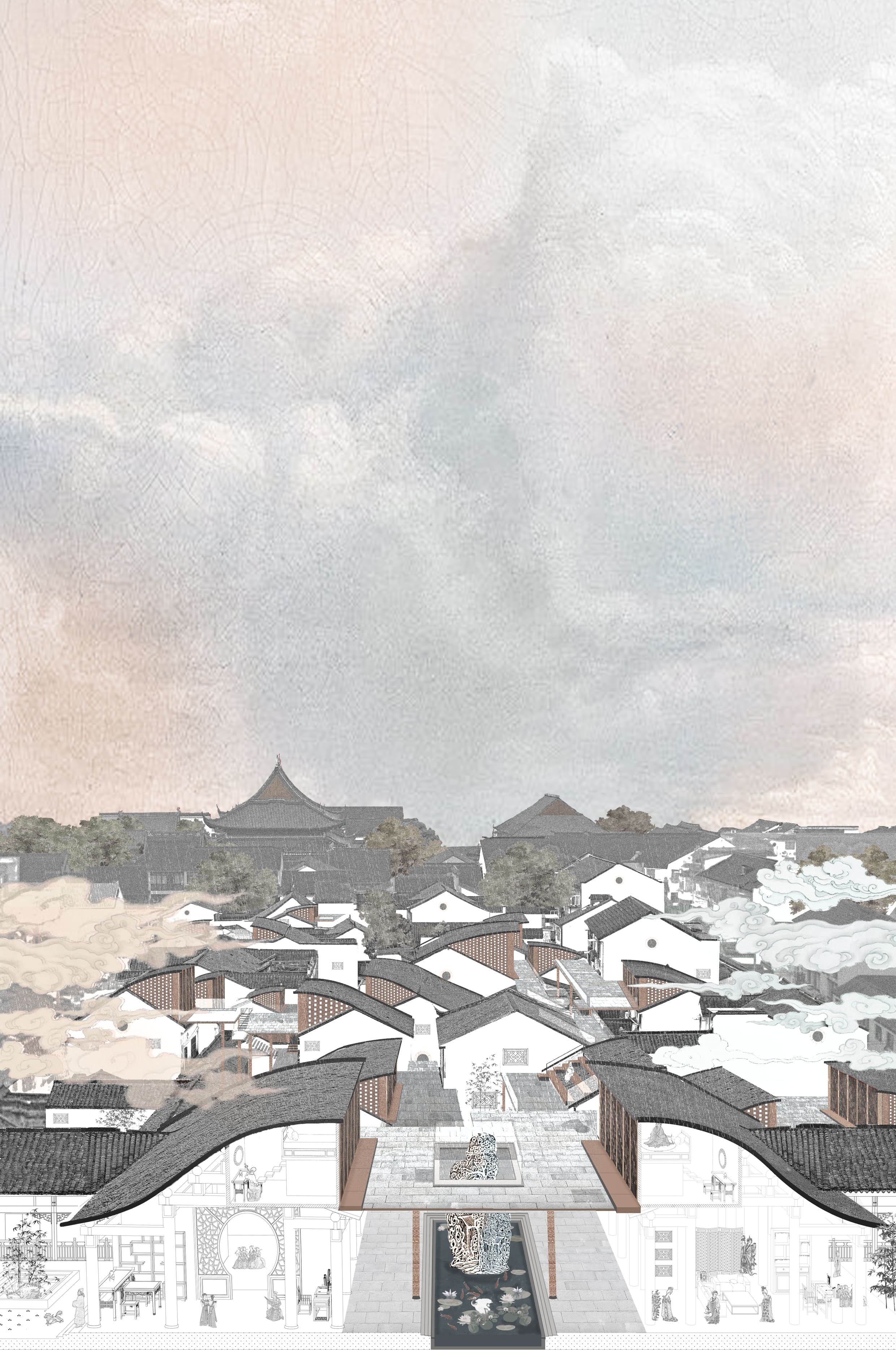
After analyzing the fabric of the classical garden and dwelling, we found out that they shared the same design system. Courtyards surrounded by buildings are the main scenic spots, and corridors link them in meticulously designed sequences.In such a garden, residents can participate in spontaneous social events while they are sightseeing.
"By planting flowers one invites butterflies,
by planting pine one invites the wind,
by planting banana trees one invites rain,
and by planting willow trees one invites
cicadas."
Creating Free Circulation Invites Communication
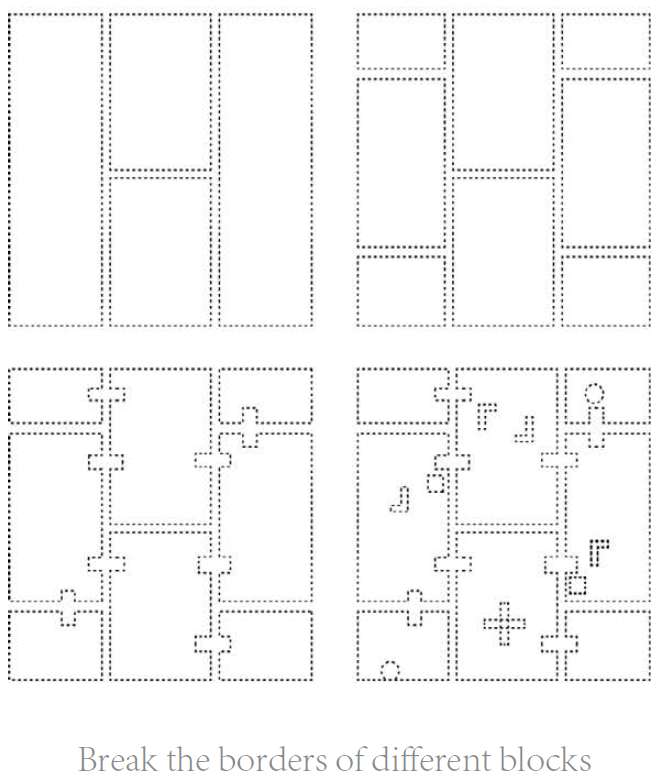
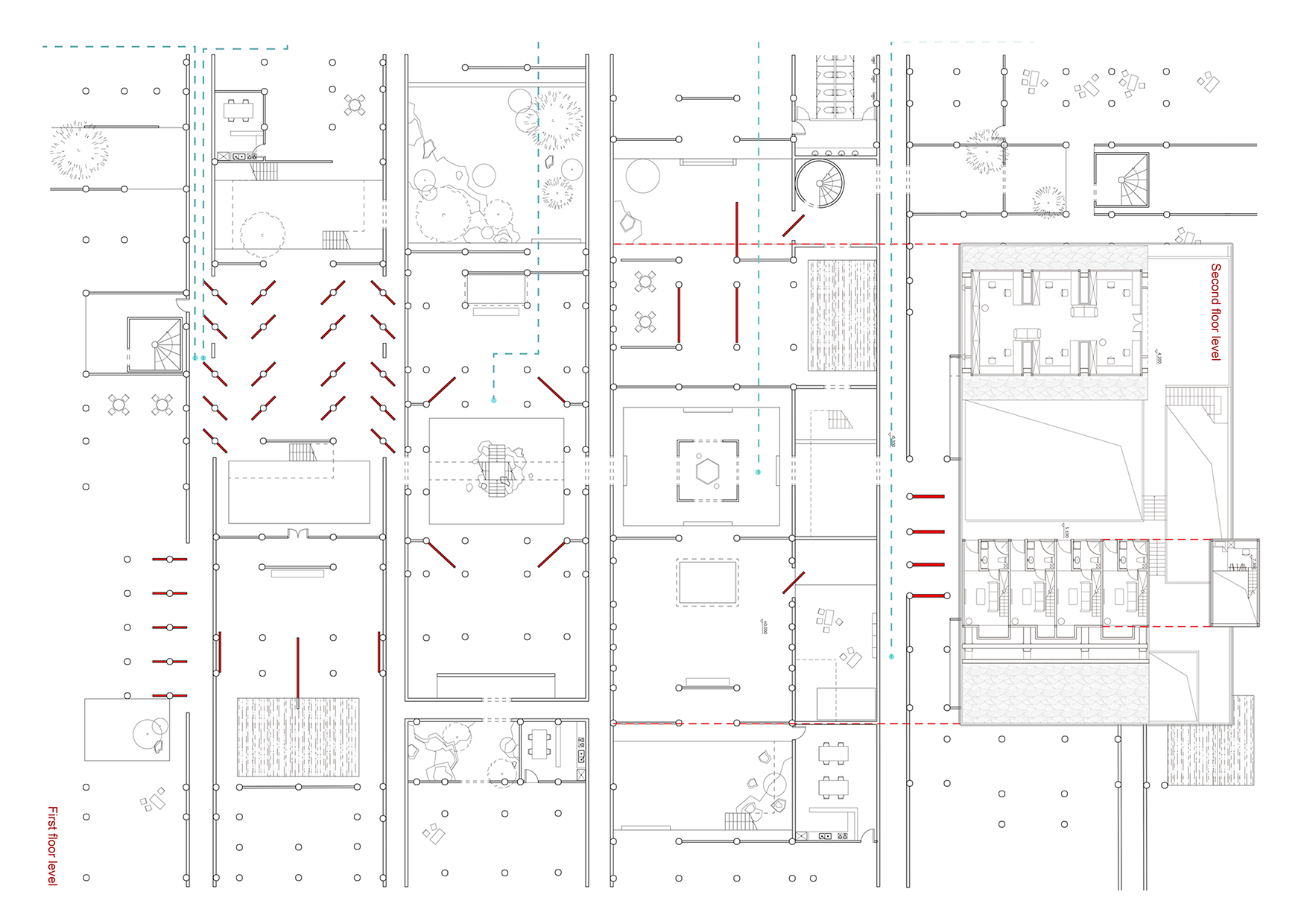
Free from private spaces like living rooms, the ground floor is equipped with garden-like openness and mobility. We broke the borders of various isolated blocks and connected them with affordable elements, such as moon gates, doors, corridors, and interactive walls. Different units were arranged in changeable circulations for users to explore.
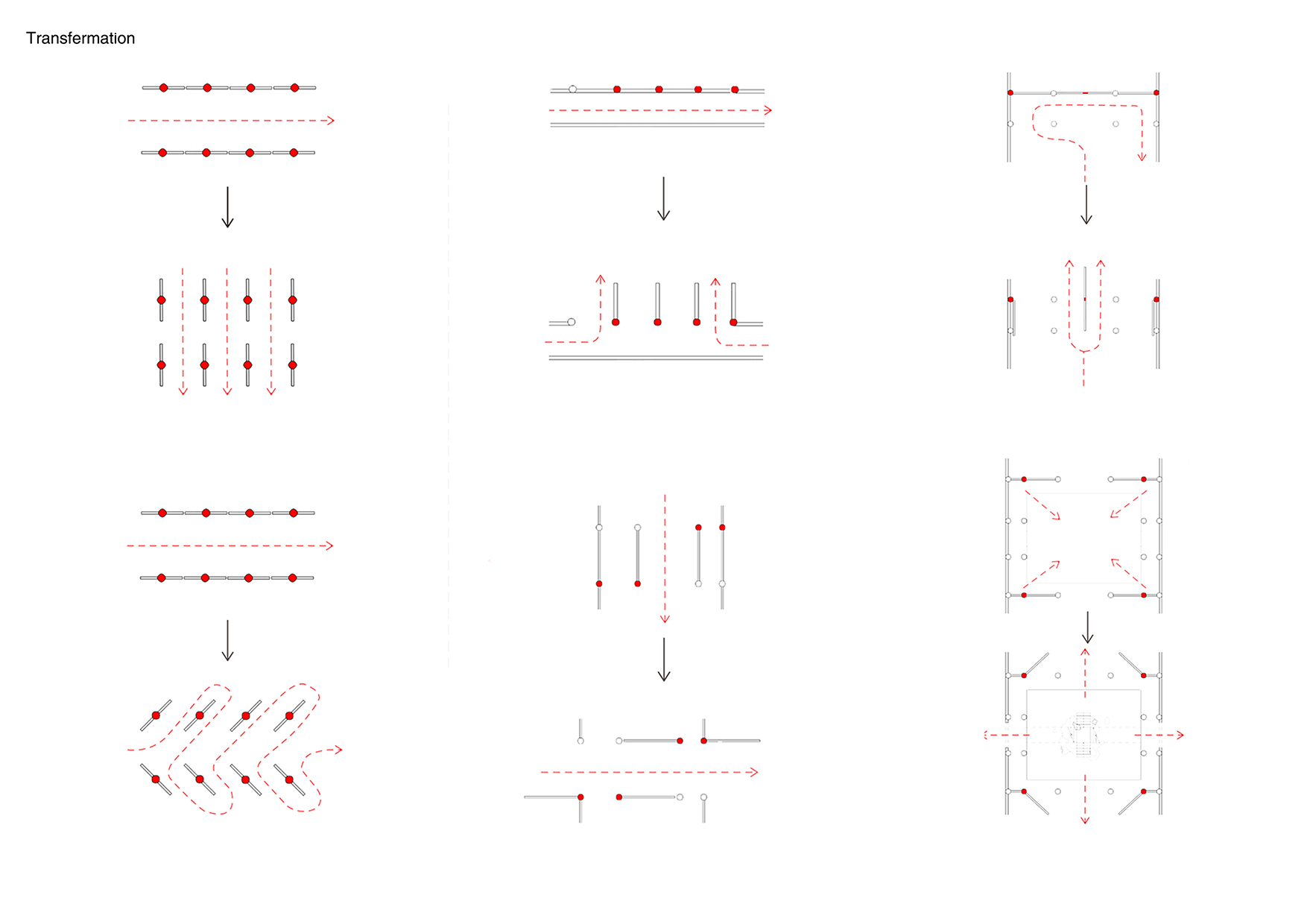
Space Transformation by Interactive Elements
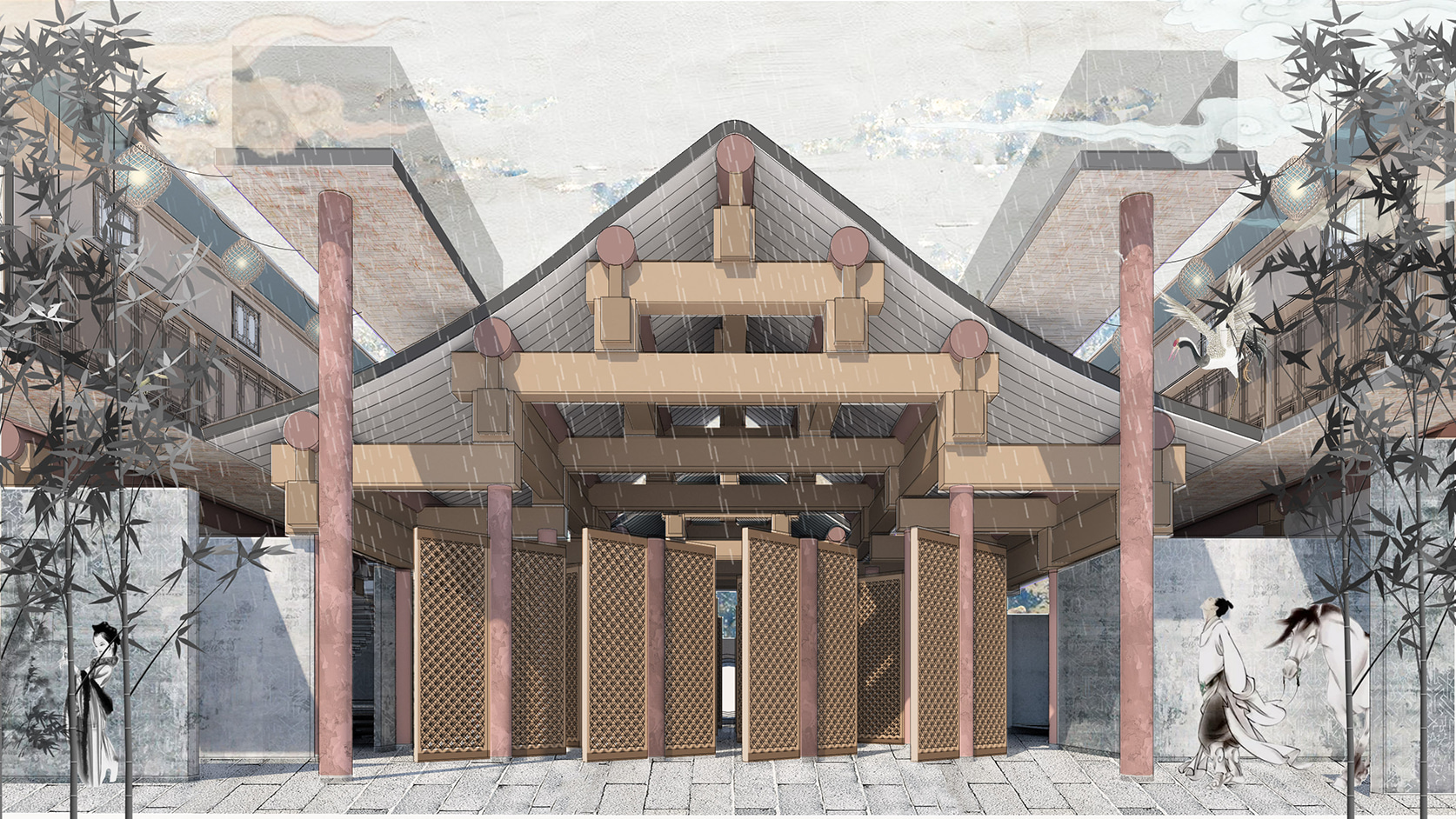
Walls, doors, paths, corridors, and bridges all have a unique role with their physical affordance in creating a landscape of continuous change and surprise. Often, walls were built for the sole purpose of allowing spectacular views through carefully contrived windows and dramatic moon gates.
In this case, I designed rotatable doors and walls to enrich the garden experience. They can convert through space to stay space, closed space to open space, walls into entrances, and corridors into exhibitions. Users were encouraged to build their gardens by arranging circulations and space properties for different activities.
.jpg)
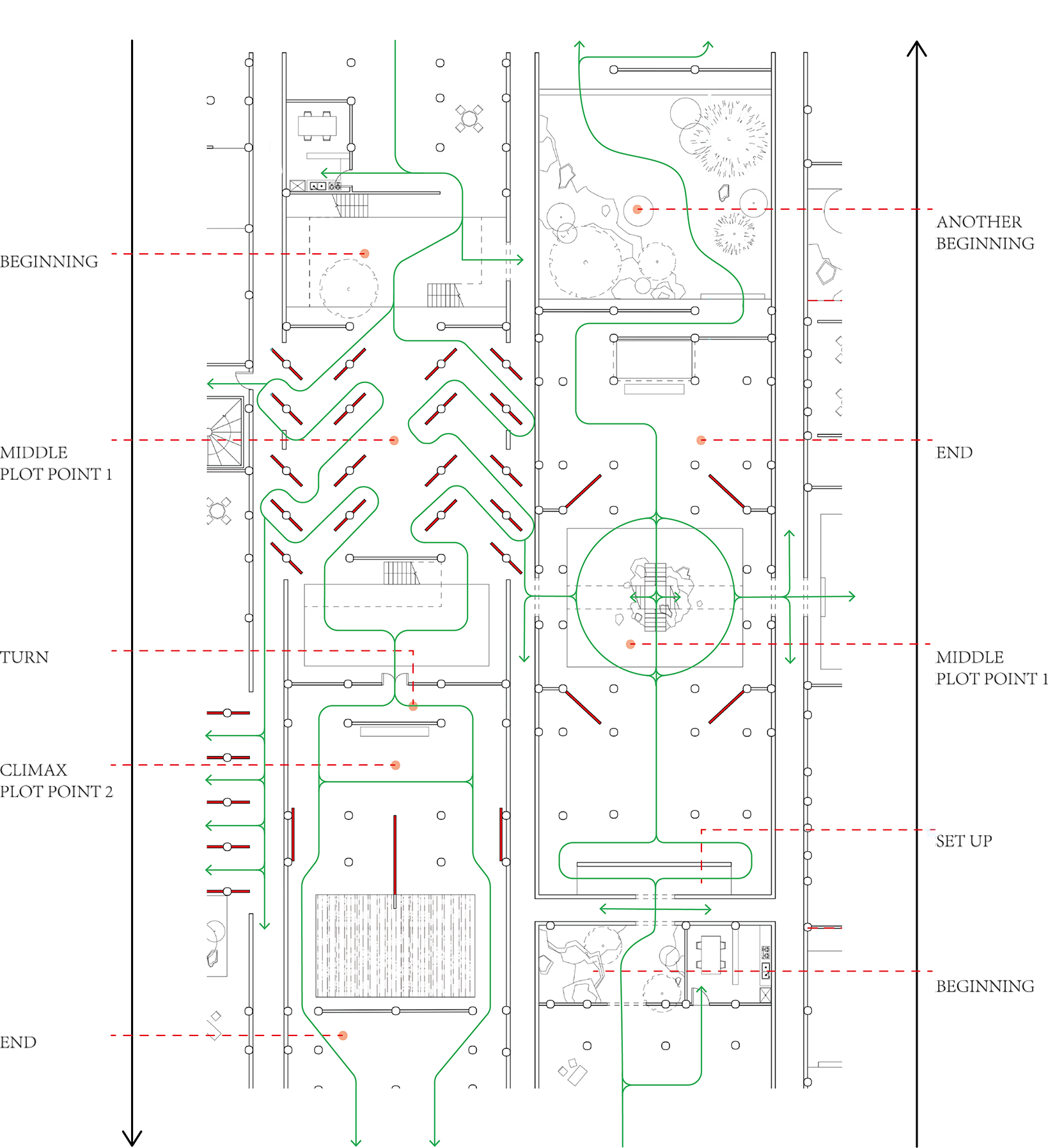
Garden Experience Based on Spatial Sequences
Same as Classical Gardens, the sight viewing experience through courtyards is well-designed in our reconstruction. We designed circulations for both linear and intertwined storytelling based on the original figure-ground relationship of houses and yards.
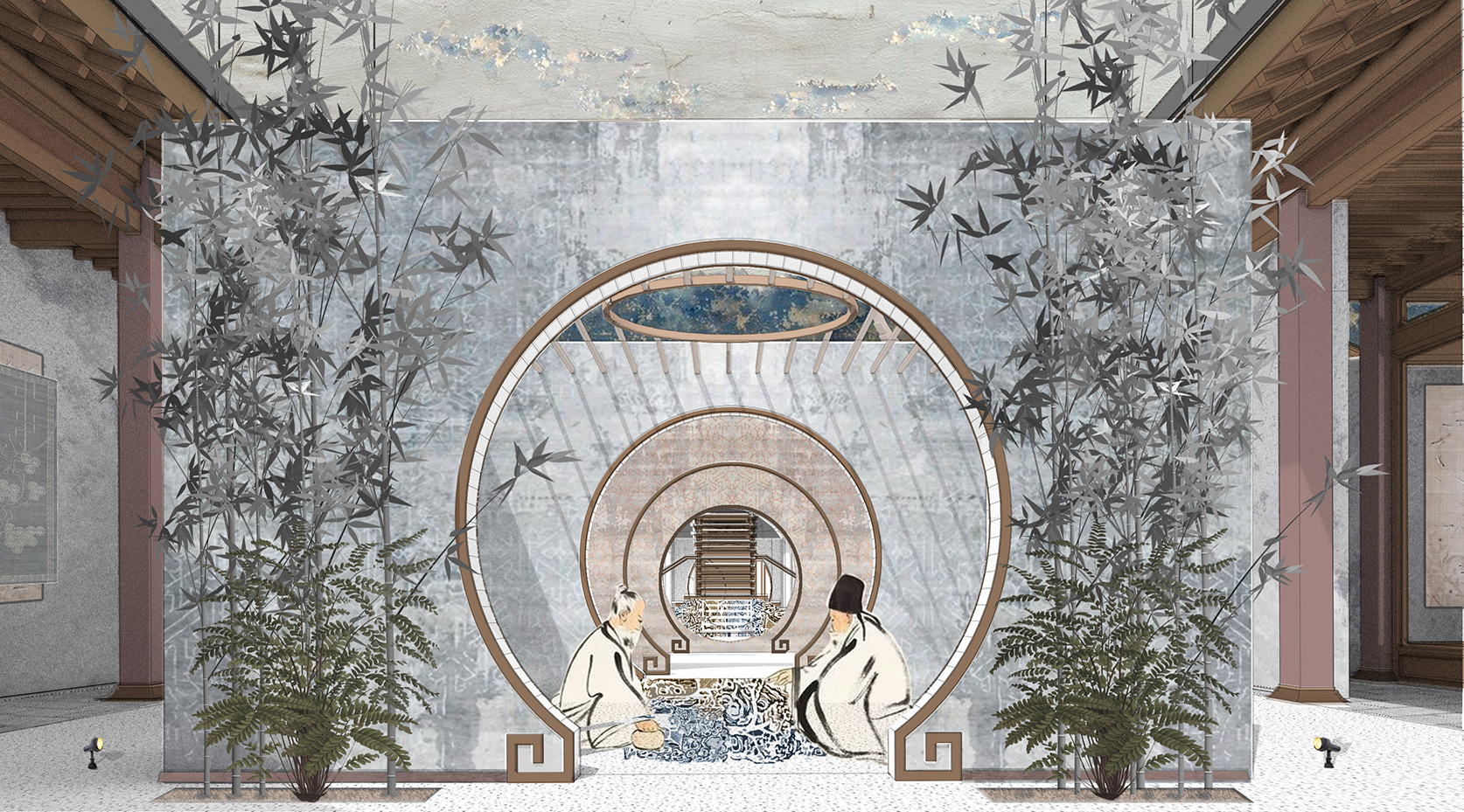
Modular Design for over 2500 Years
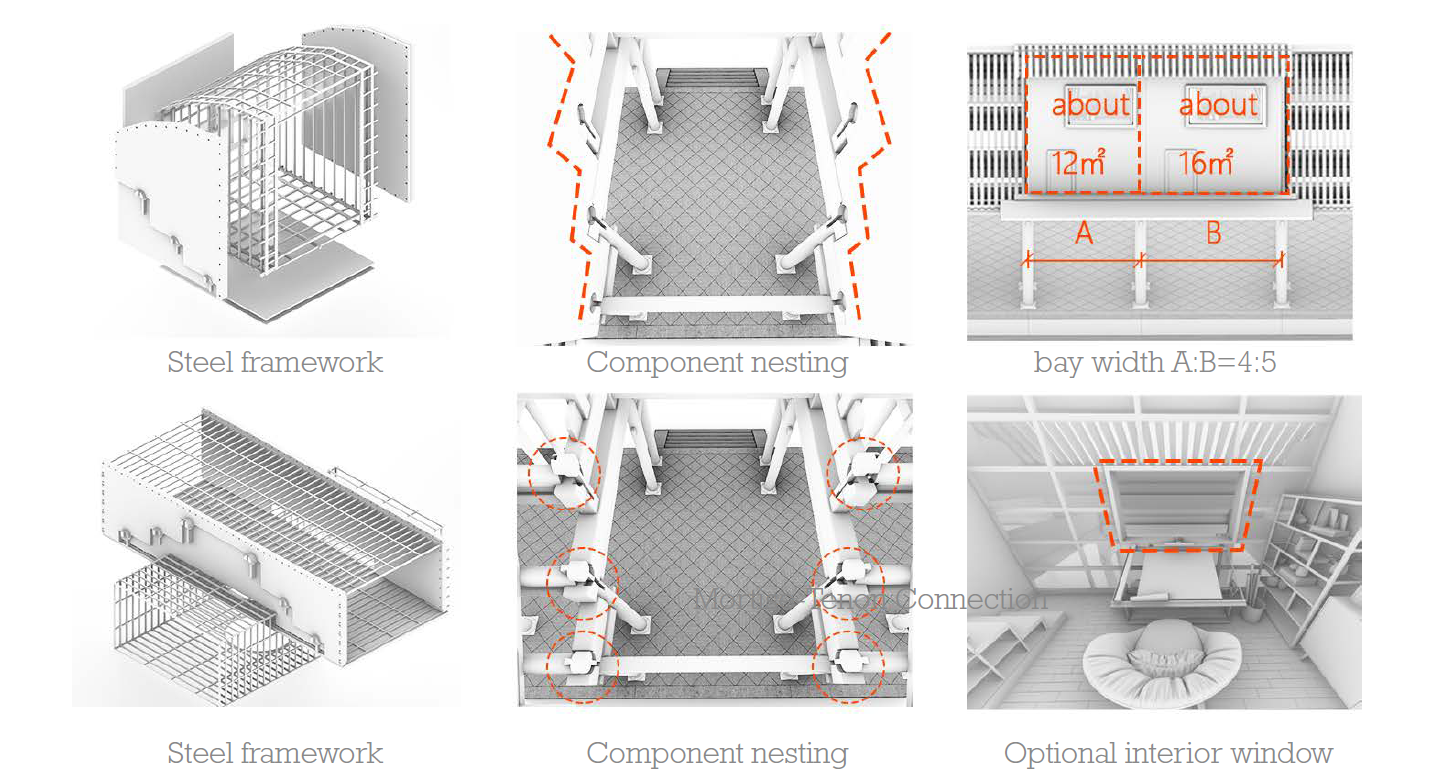
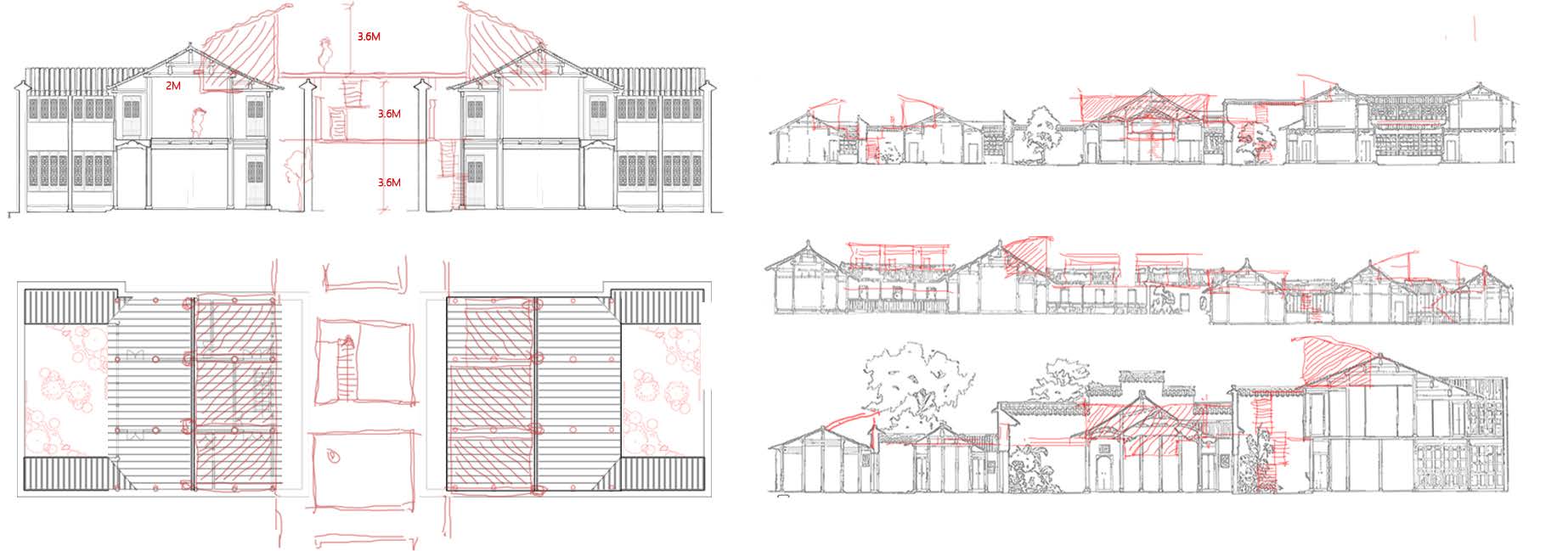
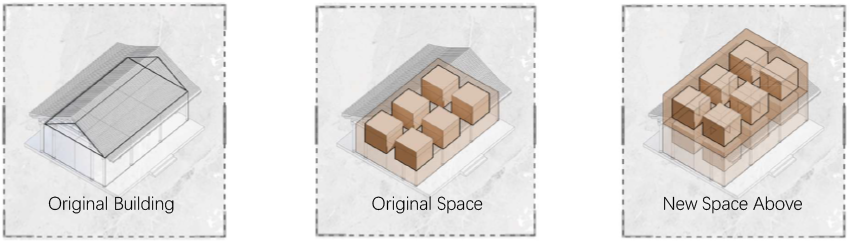
Since traditional Chinese architecture was modularized, we started our reconstruction of dwellings in the average size according to our measurement. Space in typical buildings was divided into six blocks by beams and columns, and we started the design of our co-living modules based on their original structures.
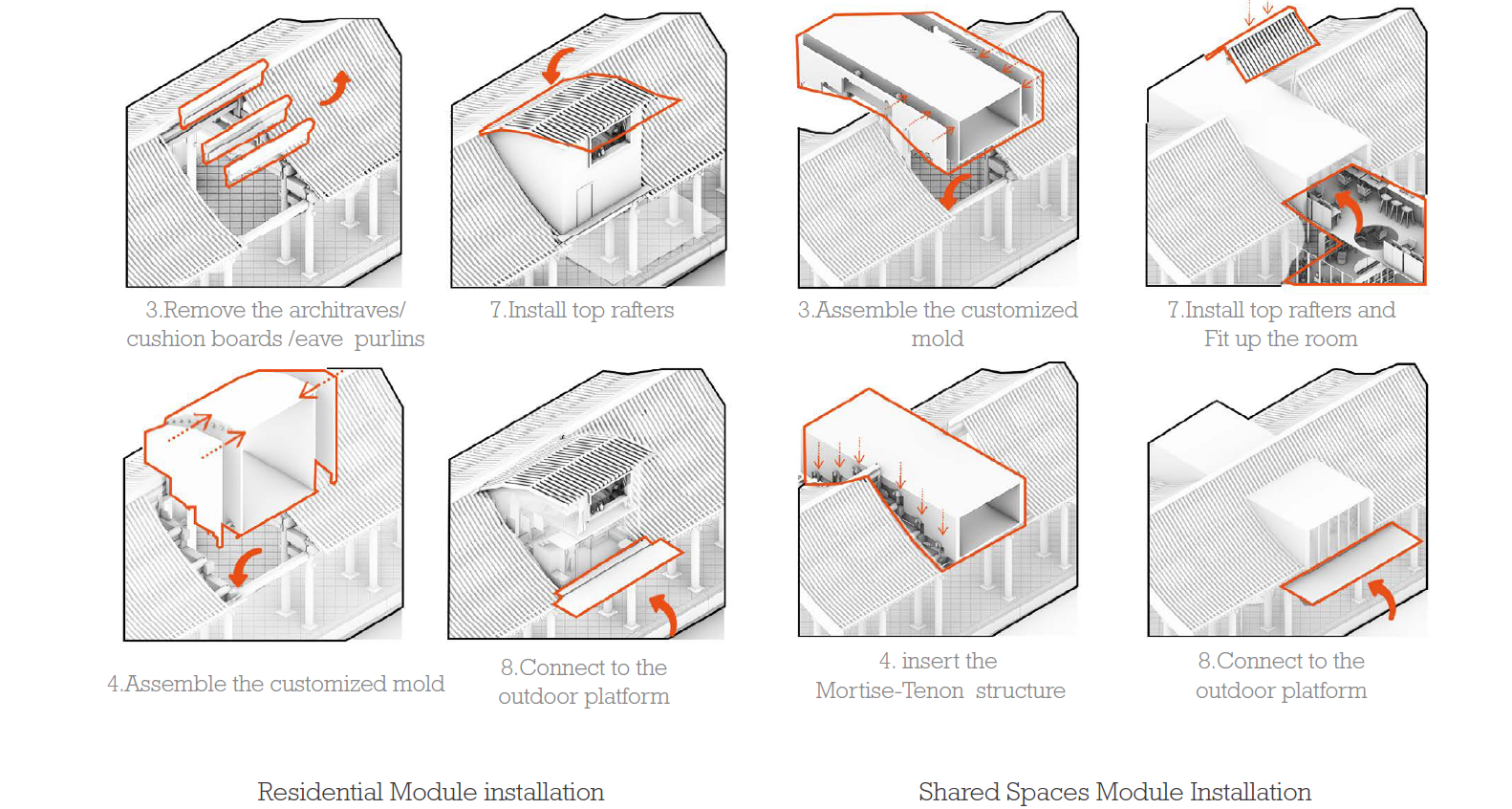
Renovating the Roofs
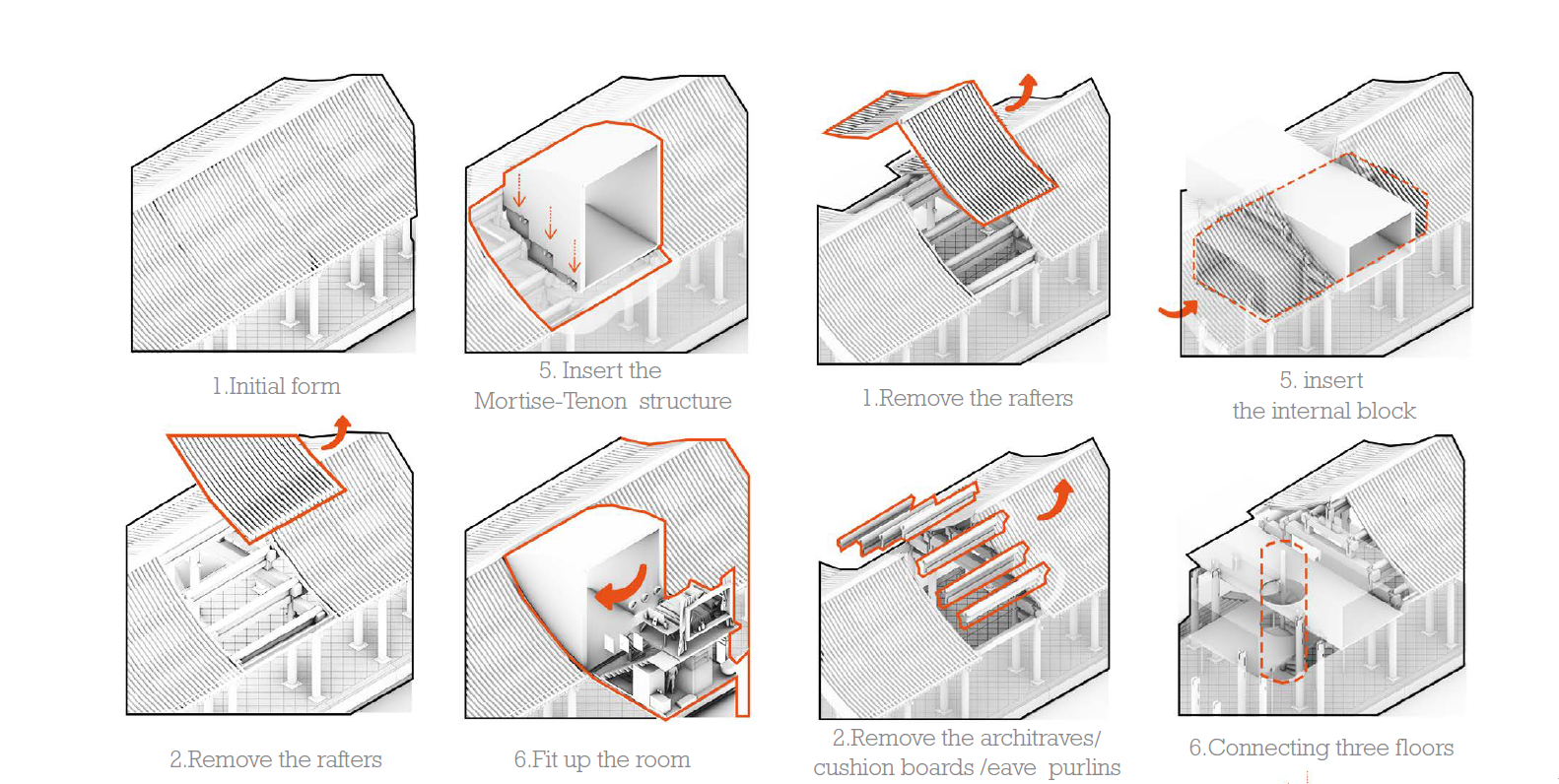
The floor area ratio of senior residence community is too low. We increased the area of living space utilizing modularization, and at the sametime, but the shared space and workspace inside the community. We designed two different modules at last. We renovated the roofs and designed the living space above. Various systems should be combined at different heights, making room for greening and landscape.
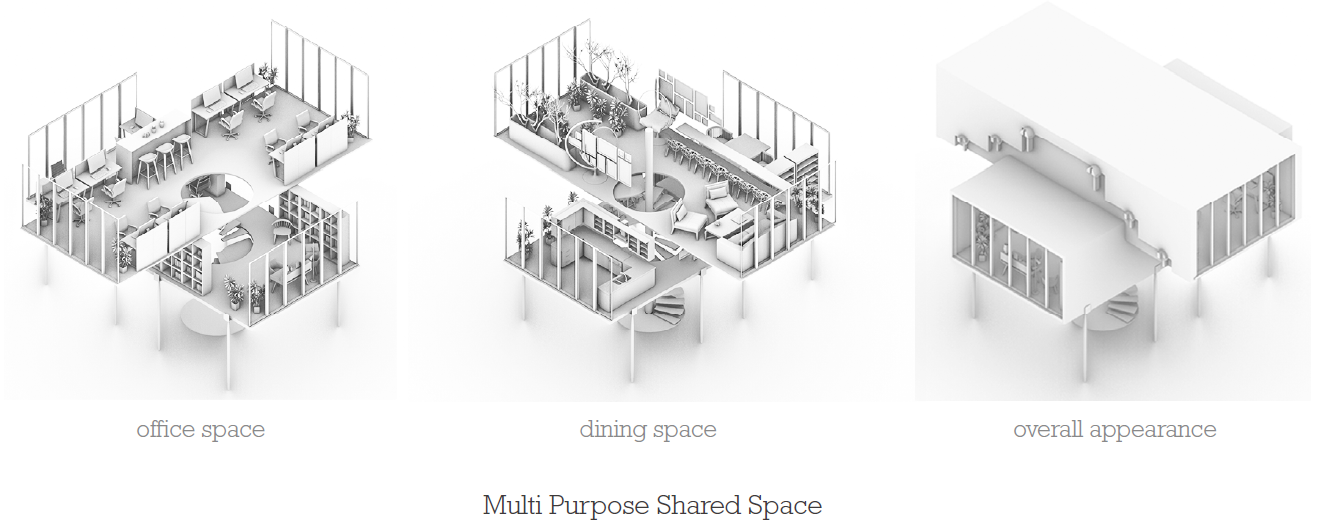
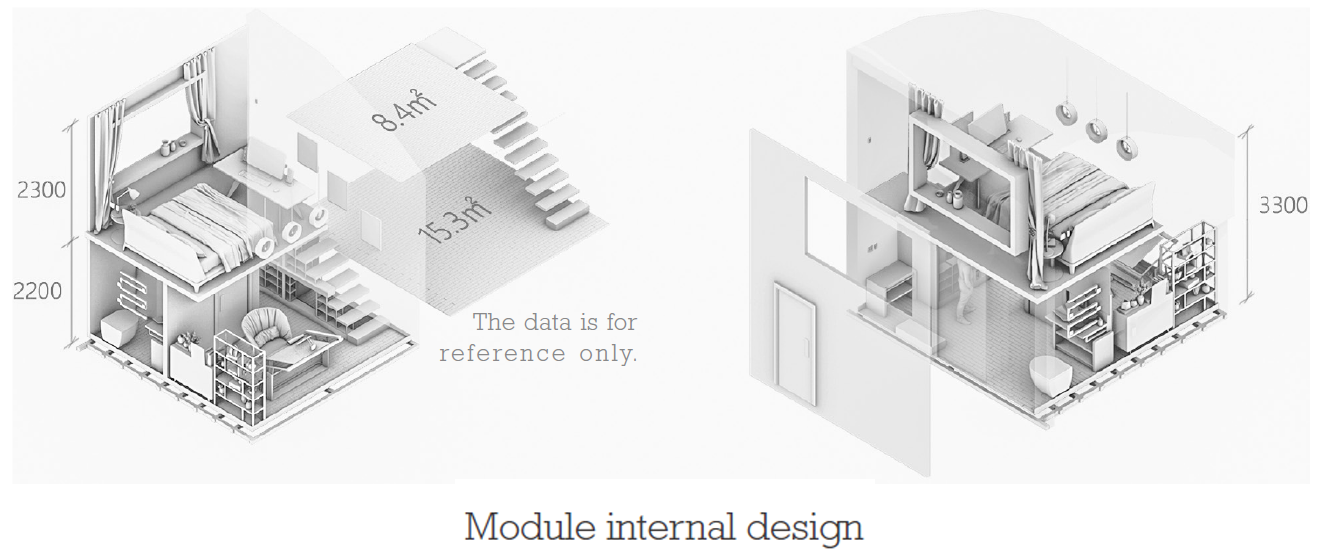
Shared Space and Internal Design
Residential modules are suitable for single or double layer medium-sized houses. According to the number of bays, one house can accommodate three to five residential modules. The width of the bay determines the size of the module. Modules above the primary bay are for the couples, and those above the secondary bay are for the singles.
Spared space modules have more stringent requirements on the size of the house. They are the shared facilities that compensate for the individual units' spatial constraints: kitchens, eating areas, lounging/living areas, café/bar areas, co-working areas, etc.